
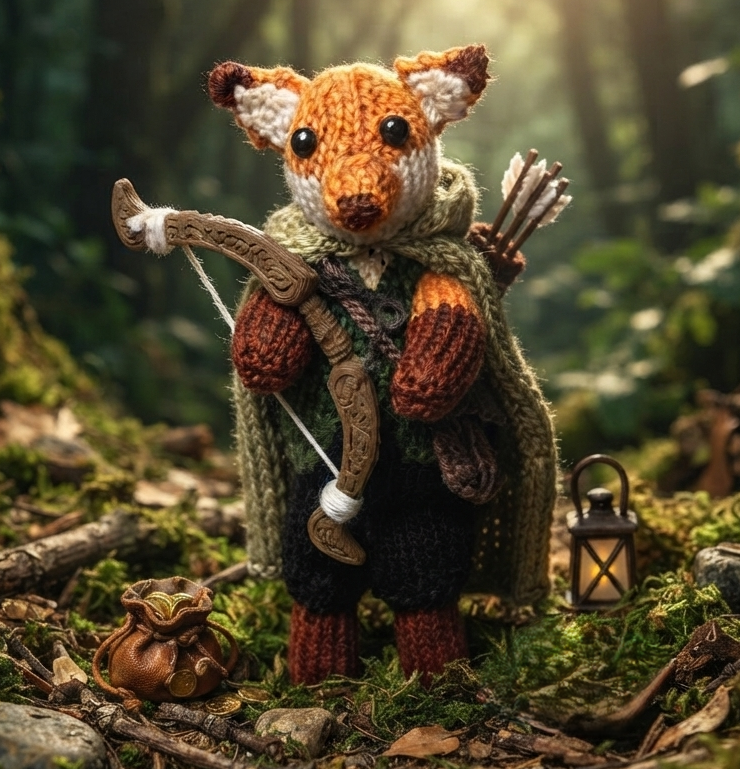
River had a bow slung ready and a quiver full of arrows, and every creature in the wood assumed, understandably, that he was passing through.
He wasn’t, really. He’d just never found a good reason to put the bow down.
It had belonged to someone once — the carving on its curve was too fine for River to have done himself, little scrolling patterns worn soft at the grip from years of some other paw. He’d found it leaning against a stump one autumn, like whoever carried it had simply set it down for a moment and forgotten to come back. So River picked it up, and somewhere between picking it up and getting used to its weight, he’d become the sort of fox who carried a bow, whether or not he ever meant to shoot anything with it.
Mostly, he used it to point things out. That way, the blackberries are still good. That way, the stream runs shallow enough to cross. His little coin pouch, heavier with pebbles and acorn caps than actual coin, jingled at his side like punctuation to every direction he gave.
He kept a lantern, too, though he rarely lit it before dark, and rarely walked far enough after dark to need it. It sat by his feet most evenings while he settled into whatever patch of moss looked softest, his cloak’s hood down, his ears finally at rest.
Travelers passing through — real ones, the kind with somewhere to be — sometimes asked if he’d guide them onward. River always considered it properly, chewing the question over the way he chewed over most things. Then he’d shake his head, kindly, and point them the right way with the tip of his bow instead.
“I’m not going that way tonight,” he’d say. Which was true of every night, really. But it never once sounded like a lie, and it never once sounded sad — just a fox who’d found his good spot in the wood, and saw no pressing reason to leave it.
The lantern would stay unlit a little longer. The moss would stay warm. And River would stay exactly where he was, bow at the ready, going nowhere in particular, quite happily.